Your first ski holiday has a way of teaching you things the hard way. The apartment that looked close to the lifts turns out to be a forty-minute walk in ski boots. The lessons you assumed were included are not. The boots you rented have your shins complaining by Wednesday afternoon. None of these is a disaster on its own, but together they can turn a week you have looked forward to for months into a week of small, avoidable frustrations. Almost every first-timer's mistake is predictable, which means it is also easy to plan around. Here is what to get right before you pay a deposit.
Accommodation is the part of a ski trip that runs out first, and it runs out quietly. Resorts have a fixed number of beds, and during Christmas, New Year, February half-term and the Easter weeks, those beds are spoken for months ahead. Leave it until six weeks before departure and you will not be choosing a place to stay so much as accepting what is left.
Two habits help. First, book the accommodation before the flights, not after. Flight schedules shift and seats can often be rebooked; a specific apartment in a specific village cannot. Second, read the location description with suspicion. "Five minutes from the centre" tells you nothing about the walk to the lifts, and in ski boots, carrying skis, it is a very different five minutes than it is in trainers. Look for a distance in metres to the nearest lift or ski bus stop, then check how often that bus runs and whether it still runs in the evening.
Watch the changeover day, too. Many alpine rentals run Saturday to Saturday, and a Tuesday flight can leave you paying for nights you cannot use or hunting for a short-break apartment that costs more per night. If your dates are fixed by work or school, filter accommodation by arrival day from the start.
Ski school booking pages are written for people who already ski. Read them as though you are looking for reasons to be disappointed, because that is exactly what you are doing.
Be honest about your level when you book. The most common first-week misery is being placed in a group that is a notch too fast, spending three days terrified, and losing confidence that takes a season to rebuild. A good school will ask you questions and will happily move you down. Ask directly whether that is possible.
Peak-week courses do sell out, so book lessons at the same time as the accommodation rather than deciding on the mountain. And confirm the meeting point. "Outside the ski school office" can mean two different buildings in a resort with three base stations.
Ordinary travel insurance frequently excludes skiing, or covers it only if you add a winter sports extension. Check for three things specifically: whether off-piste skiing is covered at all, what the policy says about search and rescue costs, and how it treats rented equipment. Many policies void cover the moment you leave marked runs, which matters even for a confident beginner following friends.
If you hold a European health card, understand what it does and does not do. It can help with state-provided treatment in some countries, but it is not travel insurance: it will not bring you home, cover a private clinic or pay for a mountain rescue. Rules and entitlements differ by country and change over time, so check the current position for where you live before you travel, and take professional advice if your situation is complicated.
Also look at cancellation cover. Weather closes roads and lifts, and injuries happen before departure as easily as during the trip. A policy that only refunds you for a documented illness in the immediate family may leave you out of pocket for a week you cannot use.
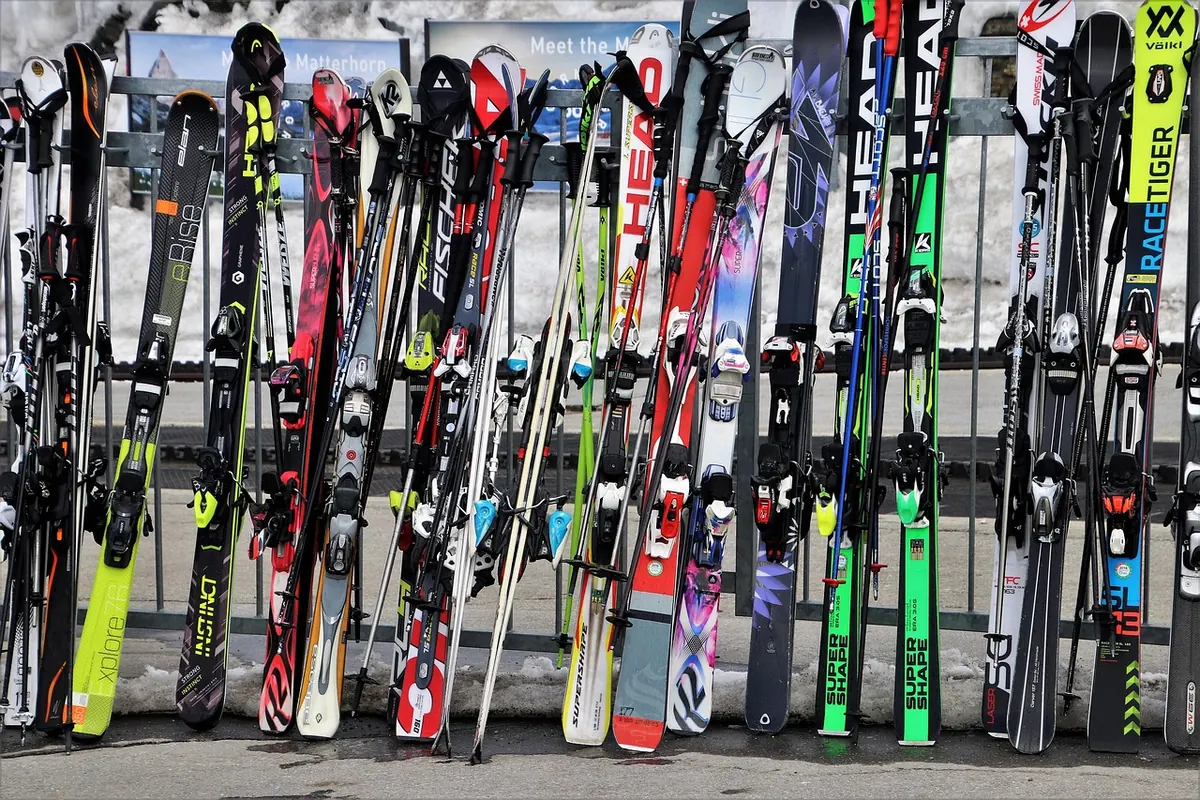
Rent on your first trip. Buying skis before you have skied is guesswork, and the money is better spent on lessons. Boots are the exception to think about carefully: they decide whether the week is enjoyable, and a rushed fitting on the first morning of a holiday is the worst possible version of it.
Collect your gear the evening before your first ski day if the shop allows, or arrive when it opens. Avoid the rental desk with the shortest queue if it means a fifteen-minute fitting; ask for the shop that measures your foot and asks about your ability. Wear the boots around the apartment for an hour, and take thin ski socks — not two pairs of thick ones.
Book rental online if you are travelling in a peak week. Sizing runs out, and the shop that has your boot size on Monday may not have it on Saturday.
A resort famous for steep terrain and a famous off-piste circuit is a wonderful place to be a strong skier and a frustrating place to learn. For a first trip, prioritise gentle, wide nursery slopes near the village, a ski school with a good beginner reputation, and a lift system that lets non-skiers in the group meet you for lunch without a ski pass. Check the resort's beginner area on the trail map before booking, and check how much of the mountain a local pass actually covers if you are tempted by a large linked area.
Get those seven things right and the rest of the week looks after itself. The snow, the views and the first wobbly run down a green slope are the easy part.
Photo: pasja1000 / Pixabay